

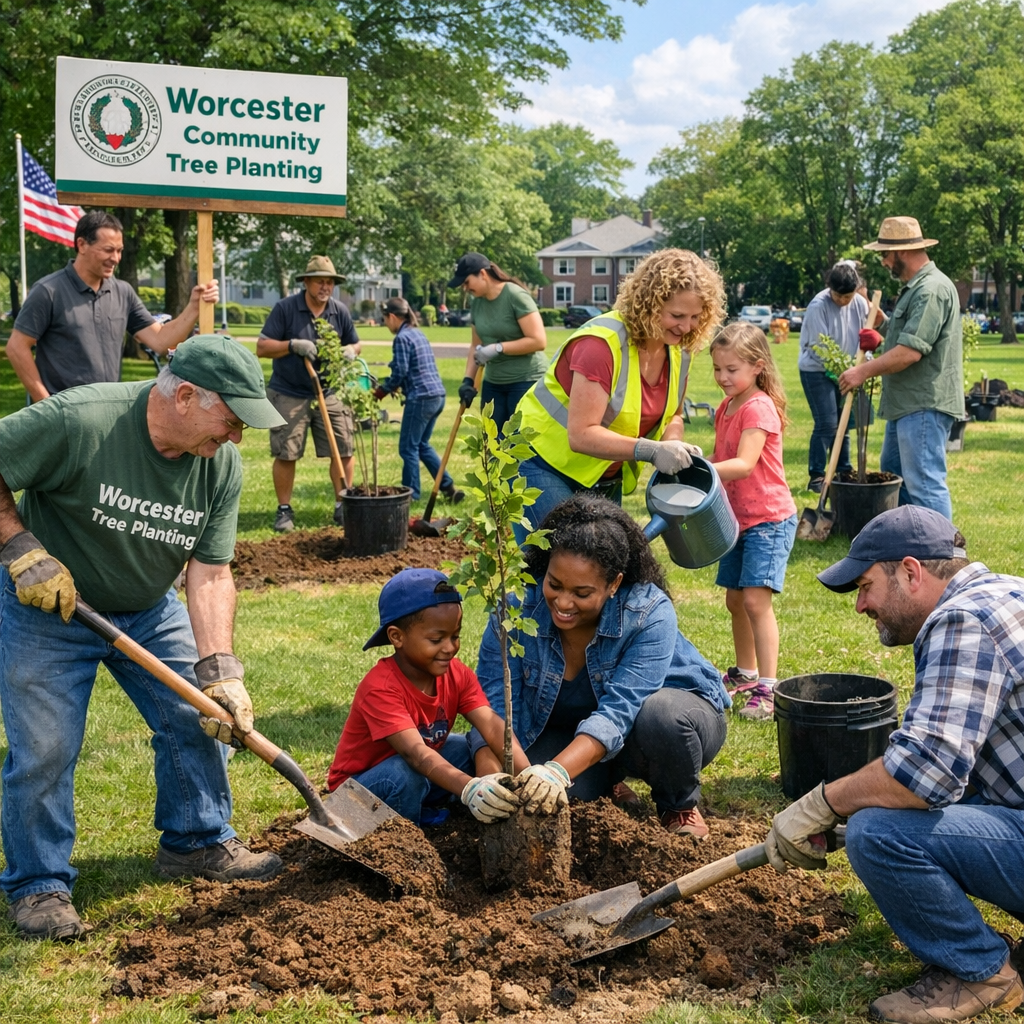
Worcester is actively pursuing sustainability through initiatives like the Green Worcester Plan, aiming for a greener, more resilient city by 2050.
Green Worcester Plan
In 2021, the city introduced the Green Worcester Sustainability and Resilience Strategic Plan, a comprehensive roadmap to integrate sustainability into all aspects of city life. This plan sets ambitious goals, including achieving net-zero greenhouse gas emissions by 2045 and enhancing climate resilience.
Renewable Energy and Energy Efficiency
Worcester has made significant strides in renewable energy. The city owns and operates 15 solar installations on municipal properties, totaling over 10.5 megawatts of solar capacity. Notably, the Greenwood Street landfill hosts New England’s largest municipally owned solar farm, generating enough electricity to power approximately 1,300 homes. Additionally, the city adopted the Specialized Stretch Energy Code in 2023, increasing energy efficiency requirements for new constructions.
Community Engagement
Community involvement is crucial to Worcester’s sustainability efforts. Programs like the Keep Worcester Clean (KWC) initiative encourage residents to participate in beautification projects, including street sweeping and waste reduction. The Worcester Green Corps, established in 2021, collaborates with local organizations to clean and beautify the city’s streets and green spaces year-round.
Climate Resilience
Recognizing the challenges posed by climate change, Worcester is enhancing its climate resilience. The city is developing a Zero Waste Master Plan to reduce waste and build a more sustainable future. Additionally, the Department of Sustainability and Resilience is working to improve understanding and capacity to withstand climate challenges such as severe flooding and extreme heat.
Educational Institutions’ Role
Local institutions like Worcester State University contribute significantly to sustainability. The university has implemented single-stream recycling, installed solar panels, and offers electric vehicle charging stations. These efforts not only reduce the campus’s environmental footprint but also serve as a model for the community.
Worcester’s commitment to sustainability is evident in its comprehensive plans and community-driven initiatives. By working together, the city and its residents are paving the way for a greener, more resilient future.